There are no items in your cart
Add More
Add More
| Item Details | Price | ||
|---|---|---|---|

Artificial Intelligence (AI) isn’t just a buzzword anymore. It’s here, shaping how businesses operate, how employees work, and most importantly, how we manage people. For HR professionals, the question is no longer “Will AI affect my role?” but “How can I leverage AI to stay relevant and add value?”
Many HR practitioners feel hesitant: “I’m not technical. AI is for data scientists, not for me.” But the truth is, you don’t need to be a data scientist to use AI effectively. You just need to understand what it can (and cannot) do, and how it applies to your HR function.
AI is quietly transforming almost every part of HR:
Each of these tasks used to take hours of manual effort. With AI, HR professionals can spend less time on repetitive tasks and more time on what truly matters — building relationships, solving people problems, and shaping culture.
Imagine two HR managers five years from now:
Which one do you think will be in higher demand?
Ignoring AI isn’t just about missing efficiency — it’s about career relevance. Organizations will increasingly expect HR professionals to be comfortable with AI-enhanced decision-making.
Here’s the reassuring truth: AI can process data, but it can’t understand context the way humans can. It can screen resumes, but it can’t see potential beyond what’s written on paper. It can recommend training programs, but it can’t inspire someone to grow.
HR professionals will always need ethics, empathy, and human judgment — things AI cannot replicate. AI is a tool, not a replacement.
You don’t need to master algorithms or coding. Start small:
These small steps build confidence and demonstrate to your organization that you’re future-ready.
AI is not a threat to HR professionals — it’s an opportunity. The real risk is staying on the sidelines while others embrace it. By understanding AI, you’re not only making your HR practice smarter, but you’re also securing your relevance in the future of work.
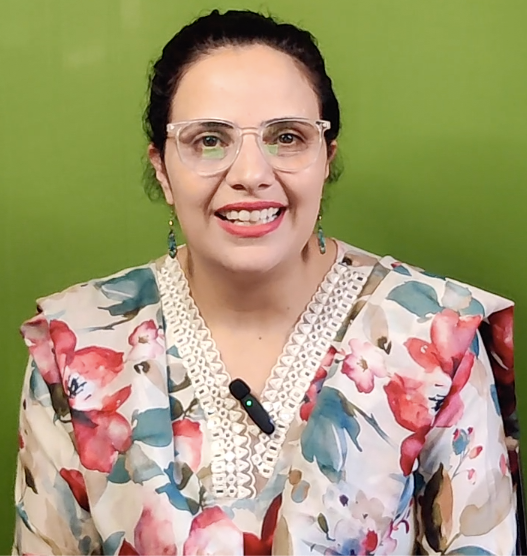
Dr Romana Gulshani
Dr. Romana Gulshani is an HR academic and consultant specializing in helping startups and professionals leverage people management and AI for growth.
 Launch your Graphy